Learn how home care agencies can improve Google visibility, strengthen local SEO, attract relevant website visitors, and turn more inquiries into potential clients.
You might already have a website. Perhaps you post on social media from time to time, ask happy clients for referrals, or run paid ads when you need more inquiries. These efforts can help, but what happens when someone in your area opens Google and searches for home care services? Will they find your agency, or will they call one of your competitors instead?
That is where a well-planned home care SEO strategy can make a difference.
Search engine optimization, commonly called SEO, helps your website appear when peop
le search for the services you provide. It is not a quick fix, and it does not guarantee a certain number of new clients. However, when you focus on the right searches, create helpful pages, and make it easy for families to contact you, SEO can become a valuable source of new inquiries over time.
The important thing is to have a plan that fits your agency, your service area, and the people you want to reach.
In this guide, we will look at practical ways to improve your online visibility, attract more relevant visitors, and turn your website into a more useful tool for growing your home care business.
What Is a Home Care SEO Strategy?
A home care SEO strategy is a plan for helping your agency appear in search results when people look for home care services in your area.
Think about a daughter who has just realized that her mother needs help with daily activities. She might search for "in-home care for seniors near me," "personal care services in Tampa," or "how to find a reliable home care agency."
If your agency offers the services she needs, you want your website to have a chance of appearing when she searches.
That involves more than adding a few keywords to your homepage. Your website needs clear service information, useful content, accurate business details, and an easy way for visitors to get in touch. Google also needs to understand what your business offers and which locations you serve.
A good strategy brings these pieces together. Instead of trying random marketing tactics, you work on the areas most likely to help your agency reach the right people.
If you want to understand the fundamentals first, read our guide to home care SEO basics. It explains the foundations that can help a home care business build a stronger presence in search results.
1. Start With the Searches Your Potential Clients Actually Make
One of the first mistakes home care agencies make is assuming they know exactly what people type into Google.
You might think everyone searches for "home care agency." Some people do, but others use much more specific phrases. They may be looking for dementia care, help after a hospital stay, personal care for an aging parent, or respite care for a family caregiver.
The words people use can tell you a lot about what they need.
For example, someone searching for "what does home care cost?" is probably still researching their options. Someone searching for "home care agency in Clearwater" may already be comparing local providers.
Both searches can be valuable, but they serve different purposes.
Start by making a list of the services your agency provides and the locations you serve. Then think about the questions families ask before they decide to hire you.
You might include searches related to:
In-home care for seniors
Personal care services
Dementia and Alzheimer's care
Respite care for family caregivers
Home care costs and payment options
How to choose a home care provider
Home care services in your city or county
You can use Google Search Console to see which searches already bring people to your website. Google search suggestions can also help you discover common questions. Keyword research tools may provide additional ideas and estimates.
Do not choose keywords based only on search volume. A broad keyword might attract plenty of visitors without bringing many relevant inquiries. A more specific search may attract fewer people, but those visitors could be a better fit for your services.
The goal is not to attract everyone. It is to help the people who need your services find your agency.
For more ideas on attracting relevant visitors through organic search, read our article on home care lead generation with SEO.
2. Make Your Google Business Profile Work for You
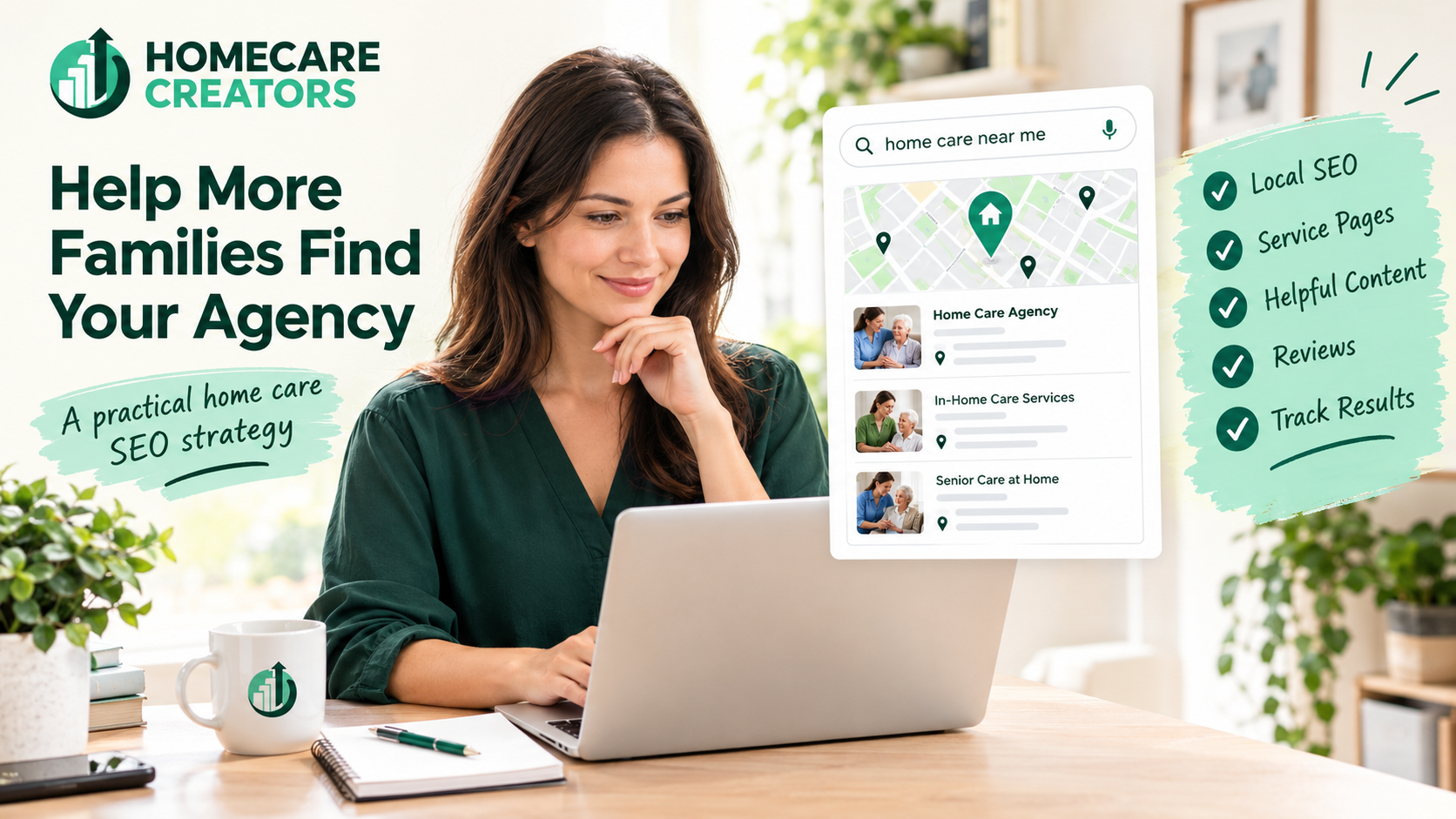
When families search for home care providers in their area, Google may show a map with local businesses before the regular website results.
This local section can be an important source of visibility for home care agencies. Your Google Business Profile helps Google understand your business and gives potential clients a quick way to learn about your services.
Start by checking that your business name, phone number, website, business category, and service information are accurate. If your agency serves clients in their homes, make sure your profile reflects your actual business setup and follows Google's guidelines for service area businesses.
Your service area should match where you genuinely operate. Adding cities where you do not provide services will not make your profile more useful to families.
Photos can also help people feel more familiar with your agency. Use appropriate, professional images that reflect your business. Always get permission before sharing identifiable photos of clients or caregivers.
Reviews deserve attention, too.
When a family has a positive experience with your agency, you can invite them to leave an honest review. Make the process simple by sharing your review link. Do not pressure people to leave positive feedback or offer rewards in exchange for reviews.
It is also worth responding to reviews professionally. Thank people for their feedback without revealing private details about a client's care. If someone raises a concern, respond respectfully and invite them to discuss the matter through an appropriate private channel.
A complete profile will not guarantee a top position in Google Maps. Local rankings depend on several factors, including relevance, distance, and prominence. Still, keeping your information accurate and encouraging genuine reviews gives your business a stronger foundation.
To review the details you should check, follow our Google Business Profile checklist for home care agencies.
You can also learn more about local SEO for home care agencies, including how your website and local business information can work together to improve your visibility.
3. Create Dedicated Pages for Your Main Services
Imagine that your agency provides personal care, dementia care, respite care, and companionship services. If all four are mentioned briefly on one page, visitors may have to work harder to find the information they need.
A family looking for dementia care has different questions from someone who needs a few hours of companionship each week. Separate service pages give you room to explain those differences.
Each important service page should answer a few basic questions:
What does the service include?
Who might benefit from it?
How can the service help a family?
Which locations do you serve?
How can someone ask about availability or pricing?
Use plain language. Families should not need a medical background or marketing knowledge to understand your services.
For example, a dementia care page could explain how caregivers may assist with daily routines, companionship, and supervision, depending on the services your agency actually provides. It could also explain how families can discuss their loved one's needs with your team.
Avoid copying the same paragraph across every service page and changing only the service name. Each page should provide information that is genuinely relevant to that service.
Location pages can be helpful as well, particularly when you serve several cities. However, a page that simply repeats your business name and swaps one city for another is unlikely to provide much value.
A useful location page should explain the services available in that area, the communities you serve, and how local families can contact you. Include information that makes the page relevant to that location.
Your website should also make these services easy to navigate. If you are planning a redesign or want to improve the experience for visitors, explore our home care website design services.
4. Make Your Website Helpful for Both Google and Families
Getting someone to visit your website is only part of the job. Once they arrive, they need to understand what you offer and feel comfortable taking the next step.
Think about what a family member might be feeling when searching for care. They could be worried about a parent's safety, unsure about the cost, or overwhelmed by the number of providers available.
Your website should make the decision easier, not more confusing.
Start with your homepage. Within a few seconds, visitors should be able to understand what your agency does, where you provide care, and how to contact you.
Your phone number should be easy to find. Your main services should be clearly explained. If you offer a consultation or care assessment, explain what happens when someone requests one.
Pay attention to the mobile experience, too. Many visitors will arrive on a phone, possibly while discussing care with another family member. Text should be readable, buttons should be easy to tap, and forms should not require unnecessary information.
Website speed matters because people can become frustrated when pages take too long to load. Regularly check your site on a phone and remove elements that slow it down without adding much value.
Trust is equally important. Families want to know who they are contacting and what they can expect. Information about your team, your approach to care, your service area, and your policies can help answer those questions.
Make sure any certifications, credentials, testimonials, or claims on your website are accurate and current. Never use a testimonial or client photograph without appropriate permission.
Finally, give visitors a clear next step. That could be calling your office, completing an inquiry form, or requesting a consultation.
Your website does not need to be complicated. It needs to answer the right questions and make it easy for someone to reach you.
If your website is getting visitors but not enough inquiries, it may also be worth reviewing your approach to home care lead generation.
5. Publish Blog Content That Answers Real Questions
A blog can help your agency reach people who are not ready to contact a provider yet.
Some families begin by researching the signs that an older adult needs help at home. Others want to understand the difference between home care and home health care. They may have questions about dementia care, caregiver responsibilities, or the cost of hiring a professional.
These questions are opportunities to provide useful information and introduce your agency to people who may need your services later.
The best blog topics usually come from questions your team hears regularly. If families ask the same question during phone calls or consultations, there is a good chance other people are searching for the answer online.
Here are a few topics worth considering:
How to Know When an Aging Parent Needs Help at Home
What Families Should Ask Before Hiring a Home Care Agency
Home Care Costs: What Families Should Understand Before Getting Started
The Difference Between Home Care and Home Health Care
How to Talk to a Parent About Accepting Help at Home
What Families Should Know About Dementia Care at Home
When writing an article, answer the main question early. Then explain the details in a way that is easy to follow.
For example, an article about home care costs should explain the factors that can affect pricing, such as the number of hours needed, the type of support provided, and local market conditions. If you publish actual prices, make sure they are current and clearly explain what they include.
You do not need to make every article a sales pitch. In fact, helpful information often builds more trust than repeatedly asking readers to contact you.
At the same time, readers should have a natural way to learn more about your services. If you publish an article about dementia care, link to your dementia care service page where it is relevant. If you explain how to choose an agency, give readers an easy way to learn about your own approach to care.
This creates a natural connection between educational content and your main business pages. It also helps visitors explore your website without feeling that every article is simply trying to sell them something.
For inspiration, review our existing articles on why a home care agency may not be showing up on Google and how home care agencies can improve their Google reviews.
6. Connect Your Blog Posts to Your Important Service Pages
Publishing good content is useful, but do not leave your articles disconnected from the rest of your website.
Internal links help visitors move between related pages. They can also help search engines understand how the different parts of your website fit together.
Suppose you publish an article about caring for a parent with dementia. A link to your dementia care service page would make sense because readers may want to understand what professional support is available.
An article about finding a home care provider could link to your main service page or a relevant location page. A guide to local SEO could link to your home care SEO service page when the link helps readers who want to learn more about improving their own online visibility.
The key is relevance.
Use descriptive link text so readers know what they will find when they click. For example, "home care SEO services" is more informative than "click here."
You should also review older blog posts from time to time. If you have published a new service page or a more detailed guide, look for older articles where a link would genuinely help.
Do not add links to every paragraph just for the sake of SEO. A few well-placed links are more useful than a page full of distracting links.
For home care agencies, a simple internal linking structure can connect three main types of content: educational articles, service pages, and location pages. Each should help visitors move toward the information they need.
7. Use Real Experience to Build Trust
Families are making an important decision when they choose a home care provider. They want to feel confident that the agency understands their needs and can deliver the services it describes.
That is why your website should reflect real experience, not just general marketing language.
Think about the questions your team answers every week. What concerns do families raise during their first call? What do they often misunderstand about arranging care? What information helps them feel more prepared?
These experiences can make your website content more useful.
For example, a guide about starting home care could explain what families should have ready before an initial conversation. An article about dementia care could discuss the importance of understanding a person's routines, preferences, and support needs.
Only include details that reflect your agency's actual services and expertise. If you discuss clinical topics, make sure the information is accurate and appropriately reviewed.
Case studies can also help demonstrate experience, provided they are based on genuine results.
At Homecare Creators, we share examples of our work on our case studies page. When discussing a project, explain the client's starting point, the work that was completed, and the results that were measured.
If you publish figures such as leads generated, phone calls, or sales, make sure those figures are supported by the original project data. Explain the timeframe and what each number represents. Do not imply that the same results are guaranteed for every agency.
You can also protect client privacy by getting permission before naming a business or sharing identifying information. If a project needs to remain confidential, describe it accurately without revealing details that could identify the client.
Real examples give potential customers something concrete to consider. They help explain what your work involves and what a client might reasonably expect from a similar project.
8. Improve Your Local SEO Instead of Targeting Every City
If your agency serves several cities, it can be tempting to create a page for every nearby location and hope that one of them ranks.
The problem is that more pages do not automatically mean more visibility.
A page should exist because it provides useful information for people in that area, not simply because a city name has been added to the heading.
Start with the locations that matter most to your business. Consider where you currently provide services, where your team has the capacity to accept new clients, and where you want to grow.
Make sure your main service pages explain your coverage area clearly. Create individual location pages when you have enough relevant information to make each page useful.
Your local SEO efforts should also be consistent with your Google Business Profile and the way your agency operates. Keep business details accurate and avoid suggesting that you have offices in places where you do not.
It is worth reviewing how your website performs in different locations as well. Search results can vary depending on where a person is searching, and a page that performs well in one city may not perform as well in another.
Local SEO is not about claiming every possible location. It is about helping people in the places you genuinely serve find the right information about your agency.
For more detailed guidance, visit our page about local SEO for home care agencies.
9. Measure Progress and Focus on the Numbers That Matter
SEO can be frustrating when you are not sure whether your efforts are working. That is why tracking results should be part of your strategy from the beginning.
Google Search Console is a useful starting point. It can show which searches bring your website into Google results, how many impressions your pages receive, how often people click, and where your pages appear on average.
These numbers can help you identify opportunities.
For example, if a page receives impressions but very few clicks, review the search terms it appears for and consider whether its title and description clearly explain what visitors will find. A low click-through rate can have several causes, so look at the query, ranking position, and search results before making changes.
If a page attracts visitors but few people contact your agency, review the page itself. Does it explain the service clearly? Is the phone number easy to find? Does the inquiry form work properly on mobile devices?
You should also track actual business inquiries. Website traffic alone does not tell you whether SEO is bringing the right people to your agency.
Where possible, measure phone calls, form submissions, and qualified inquiries. Ask new leads how they found you, and make sure your team records that information consistently.
It is also important to be realistic about timing. SEO improvements may take months to show meaningful results, and performance can change because of competition, search updates, website changes, and other factors.
Review your numbers regularly, but do not change your entire strategy every time rankings move. Look for patterns and make decisions based on evidence.
If your website is not getting the visibility you expect, our article on why home care agencies may not appear on Google can help you identify some areas worth reviewing.
10. A Practical 90-Day Home Care SEO Plan
If you are not sure where to begin, break the work into manageable steps. You do not need to fix everything at once.
Days 1 to 30: Review Your Website and Local Presence
Start by checking your website from a visitor's point of view.
Make sure your contact information is correct, your main services are easy to find, and your inquiry forms work. Review your Google Business Profile and correct any outdated information.
Use Google Search Console to identify the pages and search terms that already bring visibility to your website. Make a list of your most important services and locations.
By the end of the first month, you should have a clearer picture of what is working and what needs attention.
Days 31 to 60: Improve Important Pages
Focus on your main service pages and the locations that matter most to your agency.
Make sure each page answers common questions and explains what makes the service relevant to families. Improve page titles and headings where needed, add helpful internal links, and address any mobile usability issues.
Choose one or two blog topics based on real questions from families. Publish useful information rather than trying to produce as many articles as possible.
Days 61 to 90: Review Results and Build on Your Progress
Look at your Search Console data again. Check whether your important pages are gaining impressions, which queries are becoming more visible, and whether people are clicking through to your website.
Review inquiry data as well. If you are receiving more traffic but not more relevant inquiries, investigate the pages visitors land on and the steps they need to take to contact you.
Use what you learn to decide what to improve next. You might need stronger service pages, more useful content, better local information, or a clearer contact process.
This is a starting plan, not a promise that you will reach a particular ranking or lead target within 90 days. Your results will depend on your website's current condition, your market, and the competition you face.
The aim is to build a consistent process that helps your agency make better marketing decisions over time.
11. Should You Hire a Home Care SEO Agency?
Some agency owners prefer to manage their own marketing. Others have limited time and need help with keyword research, website improvements, content, or local SEO.
There is no single right answer. It depends on your budget, your team's experience, and how much time you can realistically dedicate to the work.
If you decide to hire an SEO agency, look for a team that understands both search marketing and the home care industry. The agency should be interested in your services, service area, business goals, and the type of clients you want to reach.
Ask how it measures success. Rankings and traffic are useful indicators, but you should also discuss how the work supports qualified inquiries and business growth.
You should understand what is included in the service. Will the team improve existing pages, create new content, manage local SEO, review technical issues, or provide reporting? Ask for clear explanations rather than relying on broad promises.
Be cautious of anyone who guarantees the number one position on Google or promises a fixed number of clients without understanding your business and market.
A good SEO partner should explain what it plans to do, why the work matters, and how progress will be measured. You should also retain access to your website, analytics, Search Console, and business profiles.
If you are looking for specialist support, learn more about Homecare Creators' home care SEO services. You can review the services offered and decide whether they fit your agency's needs.
Frequently Asked Questions About Home Care SEO
How long does SEO take to work for a home care agency?
There is no fixed timeline. Some improvements may show results sooner, while competitive keywords and new pages can take several months or longer to gain visibility. The condition of your website, your competition, and the quality of your work all affect progress.
What keywords should a home care agency target?
Start with the services you provide and the locations you serve. Terms related to in-home care, personal care, dementia care, respite care, and local home care services may be relevant, depending on your business. Use keyword research and Search Console data to understand which searches are worth prioritizing.
Is Google Business Profile important for home care SEO?
Yes. A well-maintained profile can help people discover your agency through local search and Google Maps. Keep your details accurate, select appropriate business categories, explain your services clearly, and invite genuine reviews in an appropriate way. A complete profile does not guarantee a particular ranking.
Should a home care agency have a blog?
A blog can help answer questions families ask before choosing a provider. It can also create opportunities to link readers to relevant service pages. Focus on topics that are useful to your audience and that your agency can explain accurately.
Does SEO guarantee more home care clients?
No. SEO can improve your chances of being found by relevant searchers, but it cannot guarantee new clients. Your results also depend on factors such as local demand, competition, service availability, pricing, reputation, and how effectively your agency handles inquiries.
What is the difference between home care SEO and general SEO?
The basic principles are similar, but a home care strategy needs to account for local service areas, the specific services an agency provides, and the concerns families have when arranging care. It should connect search visibility with accurate service information and a trustworthy website experience.
Final Thoughts
Growing a home care agency takes more than getting people to visit your website. You need to reach families who are looking for the services you provide, give them clear information, and make it easy for them to contact your team.
A practical home care SEO strategy starts with understanding what people search for. From there, you can improve your Google Business Profile, strengthen your service pages, publish helpful content, connect related pages, and measure whether your efforts are bringing relevant inquiries.
You do not have to tackle everything at once. Start with the areas that are most important to your business and build from there.
If you would like help deciding what to improve first, visit Homecare Creators' home care SEO services or contact our team to discuss your agency's goals.
The right next step is the one that makes it easier for the families you serve to find you and understand how your agency can help.
Ready to dominate local search in your market?
Get a free SEO audit — we'll show you exactly where you're losing clients to competitors.